


If you’re looking into rope and harness training as an insurance adjuster, you’re probably trying to figure out what’s actually required to handle “steep and tall” claims (insurance roof claims on buildings that are too steep, too high, or both, to inspect safely with ordinary ladder-only access), and where you can realistically get that training without wasting time.
At AdjusterPro, we help aspiring and active adjusters understand the training, licensing, and career paths that matter in the field. We also know this is one of those topics that can be frustrating because there isn’t always one clear, universal source for training.
| The quick answer is that rope-and-harness training is often available through local fire departments and sometimes through independent adjusting firms. In many cases, the best place to start is to contact your local fire department to see what they offer. If that’s not an option, you can also ask the IA firms you want to work with whether they provide or recommend a course. |
Table of Contents
- The Best Place to Start for Adjuster Rope and Harness Training
- Other Rope and Harness Training Options for Adjusters
- When Should Insurance Adjusters Get Rope and Harness Training?
- Next Steps: Start With Your Local Fire Department
The Best Place to Start for Adjuster Rope and Harness Training
For most insurance adjusters, the best place to begin is to contact your local fire department and ask whether they offer rope-and-harness training, high-angle training, or anything similar.
This is often the recommendation adjusters hear because local access matters. Not everyone can travel hundreds of miles for a single class, and fire departments often already offer the type of training needed to prepare for steep and tall claims.
In some cases, a few independent adjusting firms may also provide this kind of training or help you find it. If you already work with a firm, it’s worth asking whether they offer rope-and-harness instruction directly or have a preferred provider.
The key takeaway is simple: start local first, then ask the firms you want to work with what they recognize or recommend.
Other Rope and Harness Training Options for Adjusters
If your local fire department doesn’t offer this type of course, your next step is to look at other training options that can help you work more safely on roofs.
Some adjusters pursue training through IA firms, while others focus first on ladder safety and roof-access best practices. That can be especially helpful if you do not plan to regularly handle steep and tall claims but still want to improve your safety and confidence in the field.
There are also practical tools that some adjusters use to make roof access easier, including:
- Cougar Paws
- Pitch Hopper
- The Goat
These tools are not a replacement for rope-and-harness training, but they may help with traction, movement, and stability on certain roofs.
This is also worth mentioning for adjusters who are asking a slightly different question: not everyone who asks about rope and harness training actually wants to work steep-and-tall claims. Some just want safer ways to inspect roofs. If that’s the case, a ladder safety course and the right gear may be the better place to start.
When Should Insurance Adjusters Get Rope and Harness Training?
Insurance adjusters generally consider rope-and-harness training when handling “steep, tall claims.”
In many cases, having this training is part of being eligible for those assignments, even if you never actually have to pull out and use your rope and harness gear on a claim. It shows that you’ve completed the required preparation for that type of loss.
That makes this training most relevant for adjusters who want to:
- take on more complex roof claims
- qualify for a wider range of assignments
- improve safety and preparedness in the field
If you know you want to grow into steep and tall work, it makes sense to explore training sooner rather than later. If you know you do not want those claims, you may be better served by focusing on ladder safety, roof access techniques, and tools that make inspections safer.
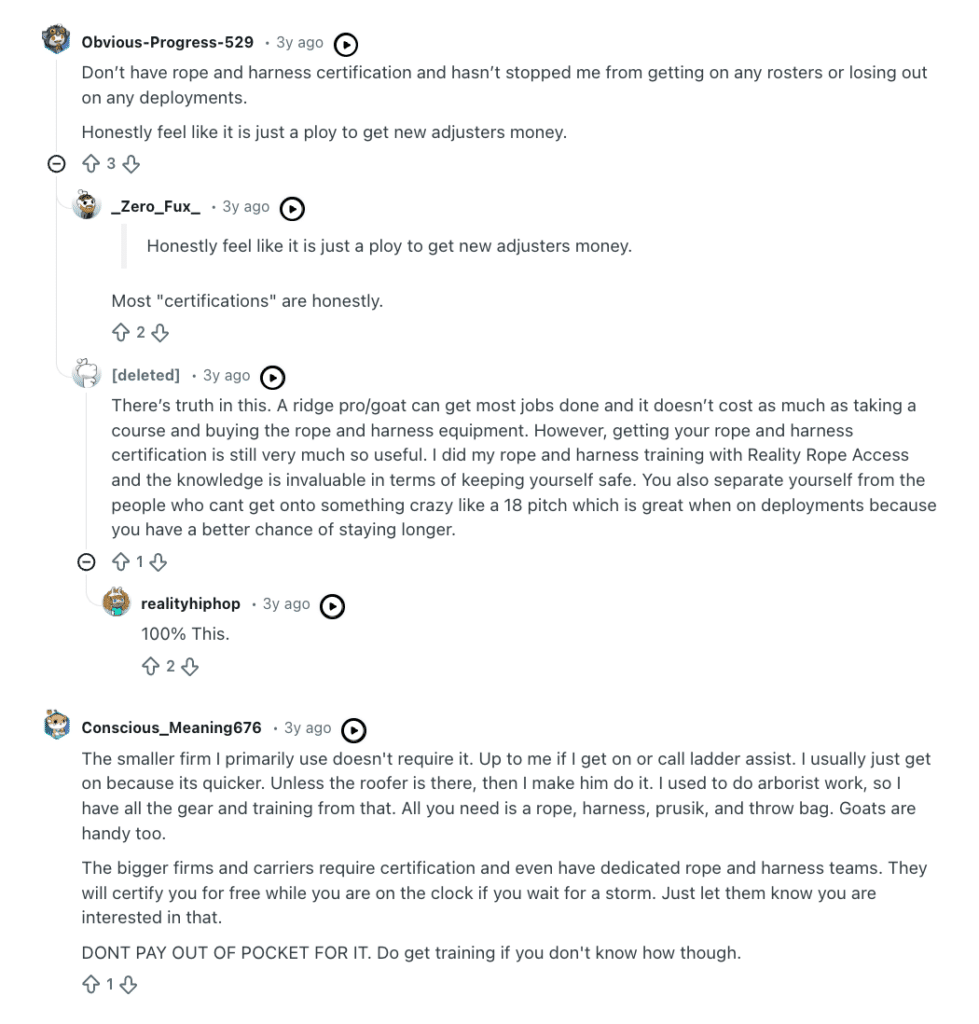
As noted in this Reddit thread, you can absolutely develop a career without the certification. However, in 2026, certifications will help you stand out and get hired. Whenever possible, ask if IA Firms or your employer will cover the cost or reimburse you (just note that this may require travel, depending on which courses they approve and where you can get them).
One user in this Reddit thread mentions Reality Rope Access. This business is located in Montgomery, TX, and offers in-person training or online courses, as well as rope and harness gear. We have heard this recommended multiple times; if you need a place to start, this is another great option.
Next Steps: Start With Your Local Fire Department
If you’re trying to find rope and harness training, the easiest next step is to call your local fire department and ask whether they offer it.
If they don’t, ask two follow-up questions:
- Do they know of a nearby provider that does?
- Does the IA firm you want to work with have a recommended training source?
That approach will usually save you time and help you find the most practical option in your area.
For most adjusters, this does not need to start with a national search. It starts with one local phone call.
Questions? Reach out to our customer service team. We are always happy to help!

