


If you’re preparing for your insurance adjuster licensing exam, one of the first questions you probably have is: “What are my chances of passing after taking this course?”
It’s a fair question. Getting licensed takes time, money, and focus, and no one wants to invest in a course only to find out later that it didn’t prepare them enough for the exam.
At AdjusterPro, we’ve helped more than 100,000 students pass their exams and become licensed adjusters over the last two decades. We also offer insurance adjuster licensing courses, so we have a clear perspective on exam prep. But this article isn’t meant to convince every student that AdjusterPro is the only option. Our goal is to help you understand what pass rates actually mean, why they’re often hard to verify in the insurance licensing industry, and what our own exam data can tell us.
Quick answer: Based on AdjusterPro’s directly verifiable exam data from 2020–2025, 83% of students pass on their first exam attempt, and 99% pass within five attempts for the exams we directly proctor.
| Important Note: Most students take their licensing exams with state-approved exam proctors, such as Pearson VUE or PSI, that are separate from their course provider. Because those testing providers generally do not publish pass rates in a way that course providers can verify, many pass-rate claims in the licensing education industry are based on student surveys, voluntary feedback, or self-reported outcomes. AdjusterPro’s pass-rate data is based on the exams we directly proctor. Because AdjusterPro is approved by certain states to administer and proctor their adjuster licensing exams, we can base those pass rates on actual exam results we know for sure (rather than surveys, satisfied-customer feedback, or self-reported outcomes). |
In this article, we’ll explain how AdjusterPro’s pass rates are calculated, what they do and do not tell you, and how to use pass-rate data when choosing an adjuster licensing course.
Table of Contents
- What Are AdjusterPro’s Exam Pass Rates?
- What Does an Insurance Adjuster Exam Pass Rate Mean?
- Why Are Pass Rates Hard to Verify?
- Why AdjusterPro Has Pass Rate Data for Some State Exams
- What Do AdjusterPro’s Pass Rates Tell You?
- What Do AdjusterPro’s Pass Rates Not Guarantee?
- How Should You Use Pass Rates When Choosing a Course?
- Next Steps for Understanding AdjusterPro Pass Rates
What Are AdjusterPro’s Insurance Adjuster Exam Pass Rates?
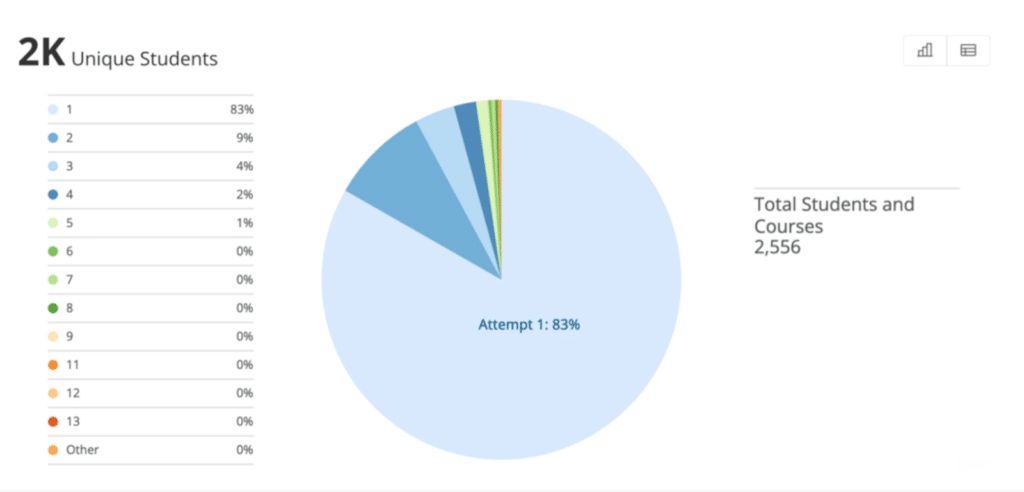
Based on AdjusterPro’s directly verifiable exam data from 2020–2025, 83% of students pass on their first exam attempt, and 99% pass within five exam attempts.
The below pass rates are based on 2,556 directly proctored AdjusterPro exam records from 2020–2025 for the Florida, Texas, and Arkansas adjuster exams. The exams for these states are included with our courses, so we have direct access to the pass rates and attempts for these students.
Here is the full breakdown:
- 83% of students pass on their first exam attempt
- 92% of students pass within 2 exam attempts
- 96% of students pass within 3 exam attempts
- 98% of students pass within 4 exam attempts
- 99% of students pass within 5 exam attempts
Note: these numbers do not represent every AdjusterPro student in every state, because many students take their state licensing exam through third-party testing providers such as Pearson VUE or PSI.
While AdjusterPro’s data is narrower than our full student population, it is directly verifiable for the exams we proctor.
What Does An Insurance Adjuster Exam Pass Rate Mean?
A pass rate is the percentage of students or test-takers who pass under a specific measurement method. Some pass rates measure first-time attempts, while others measure repeat attempts, total attempts, or eventual outcomes after multiple tries. That’s why it’s important to know exactly what kind of pass rate you’re looking at.
| For example, if a provider says 93 of 100 students eventually passed after one or more attempts, that would be a 93% eventual pass rate. But that number is different from a first-time pass rate, which only measures students who passed on their first try. |
What Is A First-Time Exam Pass Rate?
A first-time exam pass rate shows how many students pass the exam on their first attempt.
This is one of the strongest indicators of exam readiness because it shows how well students were prepared before ever needing to retake the test.
For AdjusterPro, our directly verifiable data shows that 83% of students pass on their first exam attempt for the exams we proctor.
What Is An Overall Or Eventual Exam Pass Rate?
An overall or final pass rate indicates the percentage of students who pass after multiple exam attempts.
This number is still helpful, but it tells a different story. It does not necessarily show whether students were ready on the first try. Instead, it shows whether students ultimately passed after continuing to study and retest.
For AdjusterPro, our directly verifiable data shows that 99% of students eventually pass (within five exam attempts) for the exams we proctor.
Why Are Adjuster Licensing Exam Pass Rates Hard To Verify?
Adjuster licensing pass rates are difficult to verify because most course providers do not receive official exam results for every student, every state, or every testing provider.
In many cases, pass-rate claims in the licensing education industry are based on:
- Student surveys
- Voluntary feedback
- Reviews
- Follow-up emails
- Self-reported outcomes
- Internal estimates
That does not automatically mean those numbers are wrong or dishonest. It simply means they may not include every student, and they may not be based on direct exam reporting.
This is especially important in adjuster licensing because many students take their state licensing exam through third-party testing providers such as Pearson VUE or PSI. Some states and testing providers publish exam pass-rate reports, but this information is not consistently available across every state, exam type, and course provider. As a result, many course providers cannot directly verify every student’s exam outcome when students test through a third-party provider.
Across the U.S., typical first-time All-Lines Property and Casualty adjuster licensing exam pass rates are generally understood to fall somewhere around 50% to 70%, depending on the state and exam.
Note, however, that publicly available insurance licensing pass-rate reports show that pass rates can vary widely by state, exam type, and reporting method. For example, Texas reported a 45% first-time pass rate for its Adjuster – All Lines English exam across January–December 2024.
So when you see pass-rate numbers from any education provider, it is worth asking: What exactly is being measured, and where did the data come from?
Why AdjusterPro Has Direct Pass-Rate Data For Some State Exams
AdjusterPro has direct pass-rate data for certain exams because our Florida, Texas, and Arkansas students take their exam directly through AdjusterPro.
That means for those specific state exams, we are not relying only on student surveys or self-reported feedback. We can review actual exam outcomes from the exams we proctor.
This is different from situations where a student completes an exam prep course with one provider and then takes the licensing exam through a separate testing company. In those cases, the course provider may not receive direct exam results.
However, this also means our reported pass-rate pool is smaller than our total student population.
Many AdjusterPro students complete our course or exam prep materials and then take their official state exam through Pearson VUE, PSI, or another approved testing provider. When that happens, AdjusterPro may not receive direct result data from the testing provider.
So when we talk about AdjusterPro pass rates, we are talking about the exams where we have directly verifiable data, not a broad estimate pulled from every student who has ever used our courses.
What Do AdjusterPro’s Pass Rates Tell You?
AdjusterPro’s pass rates tell you how students performed on the exams we directly proctored from 2020 to 2025.
That data gives us a clearer picture of student outcomes for those specific exams, including:
- How many students passed on the first attempt
- How many students passed after additional attempts
- How students performed when AdjusterPro could directly verify the result
- Whether our course materials appear to prepare students effectively for those exams
The first-time pass rate is especially useful. When 83% of students pass on their first attempt, that suggests most students who complete the required preparation are going into the exam with a strong foundation.
The eventual pass rate is also encouraging. When 99% of students pass within five attempts, it shows that students who continue working through the process have a very high likelihood of ultimately passing.
What Do AdjusterPro’s Pass Rates Not Guarantee?
AdjusterPro’s pass rates do not guarantee that every student will pass the exam on the first try.
A pass rate is a helpful data point, but it is not a promise. Your individual result can still depend on several factors, including:
- Your state’s licensing requirements
- The difficulty of your specific exam
- How much time you spend studying
- How comfortable you are with test-taking
- Whether you review and understand why you missed questions before exam day
It is also important to remember that not every state exam is exactly the same. Some exams may be harder than others, (New York’s is notoriously difficult), and licensing requirements can vary by state.
A strong pass rate is encouraging, but your preparation still matters.
How Should You Use Pass Rates When Choosing An Adjuster Licensing Course?
A pass rate can help you understand how students have performed in the past, but it is most useful when you understand how the number was collected.
Before relying on any pass-rate claim, ask:
- Is this a first-time pass rate or an eventual pass rate?
- Is the data based on direct exam results or student surveys?
- What time period does the data cover?
- Which states or exams are included?
- Does the provider explain the limits of its data?
- Does the course include practice questions, exam prep tools, or state-specific guidance?
AdjusterPro’s strongest pass-rate data comes from the exams we directly proctor. That makes the data narrower than our full student population, but also more verifiable than survey-based reporting.
In other words, we would rather be specific and transparent about the data we can verify than make a broad pass-rate claim that sounds impressive but is harder to prove.
Next Steps For Understanding AdjusterPro Pass Rates
If you’re researching insurance adjuster licensing courses, pass rates are a fair thing to ask about. You deserve to know whether a course helps students prepare effectively for the exam.
Before choosing any course, confirm whether your state exam is proctored by the course provider or a third-party testing company. That will help you understand whether any published pass rate reflects your specific licensing path.
| If you’re ready to start your licensing journey, explore: AdjusterPro’s insurance adjuster licensing courses. If you are getting ready to start studying, be sure to check out our article, “What’s the Best Way to Pass Your Adjuster Licensing Exam Using an AdjusterPro Course?” |

