


If you’re researching insurance adjuster licensing or exam prep, you’ll likely run into both Kaplan and AdjusterPro. Kaplan offers adjuster prelicensing and exam prep by state, and AdjusterPro positions itself as an online provider of adjuster licensing, exam prep, and continuing education.
At AdjusterPro, we’ve trained more than 100,000 students, and our entire focus is on the insurance adjusting industry. We know how important it is for prospective students to compare courses before making a decision.
Before we jump in, let’s recognize that Kaplan is a respected name in this industry. They’ve helped a lot of people get started, and while AdjusterPro may be the best fit for some students, Kaplan may be as good or even a better fit for others. Our goal is to give you a clear, fair overview of both options so you can decide which program best fits your goals.

The Quick Answer:
If you want a broad, established education brand with multiple learning formats and a lower-cost entry option, Kaplan may be the better fit. If you want training built specifically for adjusters, a more self-paced online experience, and longer access to course materials, AdjusterPro may be the better fit.
Main Takeaways:
– Choose Kaplan if you want brand familiarity, customizable course options, and a shorter-term study plan.
– Choose AdjusterPro if you want adjuster-specific training, built-in study tools, and lifetime access.
– Don’t compare pass rates at face value because the two companies report success differently.
– Before enrolling, confirm your state requirements, course access period, included tools, total cost, and support options.
Table of Contents
- What Do Kaplan And AdjusterPro Have In Common?
- What Are the Differences Between Kaplan And AdjusterPro
- Pros and Cons of Kaplan
- Pros and Cons of AdjusterPro
- How Much Do Kaplan Adjuster Licensing Prep Courses Cost?
- How Much Do AdjusterPro Adjuster Licensing Prep Courses Cost?
- Kaplan Vs AdjusterPro Pass Rates
- AdjusterPro Vs. Kaplan: Which is Best For You?
- What’s Next: Where to Go From Here?
| Quick Disclaimer on AdjusterPro Vs. Kaplan Comparison Methodology |
|---|
| This comparison is based on publicly available information, including official websites, course and product pages, and other visible details such as features, formats, and positioning. Where helpful, we may also reference reviews or testimonials, but we have not used Kaplan’s course firsthand or reviewed any internal Kaplan outcomes data. Because we work for AdjusterPro, readers should keep that perspective in mind and do their own research before choosing a program. The examples below use Texas courses for clarity, but insurance adjuster licensing requirements and course options vary by state, so readers should always verify details for their own state before enrolling. Both companies organize adjuster offerings on a state-by-state basis. |
What Do Kaplan And AdjusterPro Have In Common?
Kaplan and AdjusterPro have some meaningful overlap. Both providers:
- Offer state-specific training tied to insurance licensing and exam prep.
- Provide online learning options.
- Base state-specific course material on the laws cited by the exam outlines (published by the corresponding state)
- Are built for people who want a more structured study path instead of piecing everything together on their own.
Before you continue, please note: both providers build state-specific courses around the requirements and topic areas set by the state. No course provider knows the exact questions that will appear on your licensing exam. Instead, providers use the state’s published requirements, exam guidance, and content categories to build a course designed to help you prepare. That means the core topics may overlap, even if the format, tools, and course experience differ.
| For example, both Kaplan and AdjusterPro offer approved Texas-specific pre-licensing courses and build their courses based on the licensing requirements and exam guidance published by the state of Texas. To be approved, providers must submit a final exam guide showing how the exam questions fall into the categories specified by Texas rules. |
What Are the Differences Between Kaplan And AdjusterPro
1. Course Focus And Audience
One of the clearest differences between Kaplan and AdjusterPro is business scope:
| AdjusterPro was founded by insurance adjusters who hope to support other adjusters with the material they wish they had when getting started. It specializes in adjuster licensing, exam prep, continuing education courses online, and Xactimate training (live webinar). Of note, AdjusterPro’s sister company, All-Lines Training, serves a different audience with agent licensing prep and CE. | Kaplan Financial serves a broader audience across insurance licensing and other financial education categories. Its insurance division covers multiple license types, including life & health, property & casualty, personal lines, and adjuster licensing. |
That means the two companies may appeal to slightly different buyers:
- Kaplan may be a better fit if you want a large, established education brand or if you are considering other types of insurance licenses beyond adjusting and agent.
- AdjusterPro may make more sense if you want a provider whose public offerings are specifically centered on adjuster training and licensing (while agent licensing prep is handled through its sister brand).
2. Licensing And State Coverage
Both Kaplan and AdjusterPro offer state-specific adjuster training, but Kaplan’s site says course availability varies by state and that it is still releasing pre-licensing and exam prep courses in some states that require adjuster licensing exams.
AdjusterPro also organizes its adjuster offerings by state. Its public course catalog shows whether a given state has pre-licensing, exam prep, continuing education, a state exam-included option, or a non-licensing path such as DHS.
Because both companies build courses around state requirements, buyers may find overlap in the core subject matter covered. That does not mean the courses are identical. In many cases, the bigger differences are how the material is delivered, what study tools are included, how long access lasts, and how the overall course experience is structured.
You should definitely verify the requirements for your own state before enrolling with either provider. Both companies present adjuster training on a state-by-state basis.
3. Learning Format And Course Features
Kaplan publicly offers several learning formats, including Live Online, Live & OnDemand, and Self-Study. Its learning methods page also highlights features such as online study tools, review exams, video and audio libraries, and direct interaction with instructors in some packages. Whether you have access to some of these features depends on the package level you purchase.
AdjusterPro’s public materials lean more heavily into self-paced online training. Its site describes its courses as completely online, self-paced, and flexible, and its classroom materials include tools such as smart quizzes, unlimited practice exams, a performance dashboard, exam readiness reporting, customizable flashcards, printable PDFs, and lifetime access.
4. Access And Flexibility
AdjusterPro publicly promotes lifetime access to its courses, which may matter to students who want to revisit material over time or who know they may need more flexibility in when they can complete their course.
Kaplan’s public materials, by contrast, point to time-based access and paid course extensions (including 30-, 60-, and 90-day extension options).
That is a meaningful difference in value and learning style. Some students may prefer a shorter, more structured study window, while others may place more value on long-term access.
Pros and Cons of Kaplan
What people like:
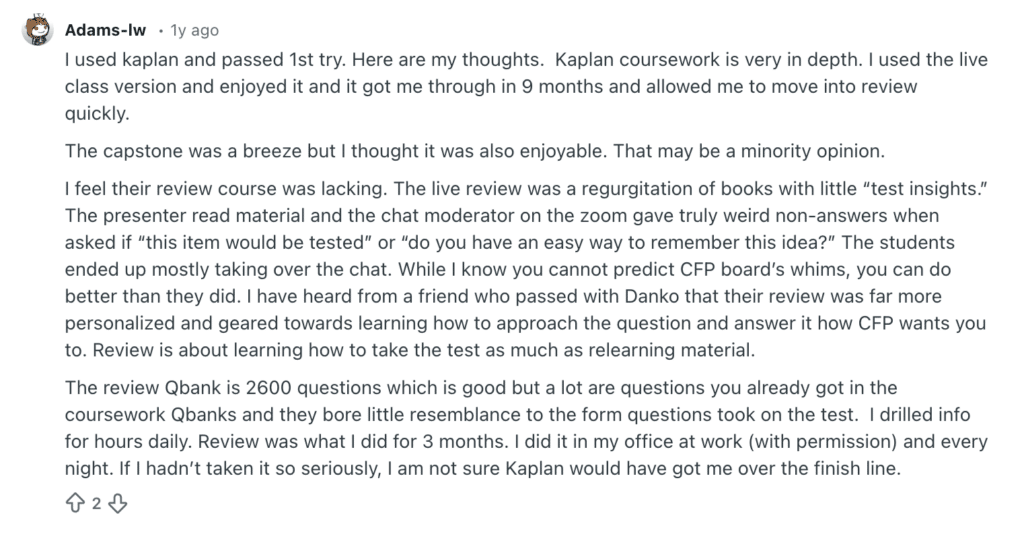
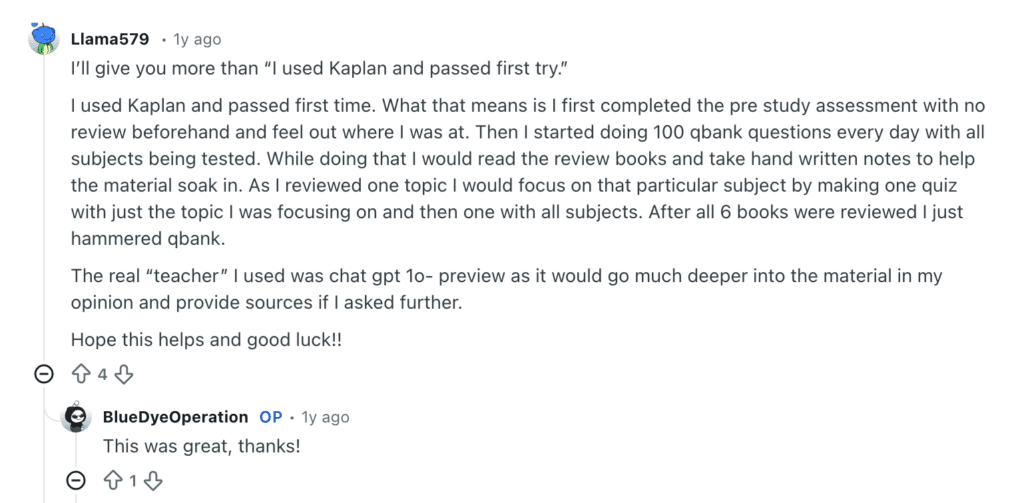
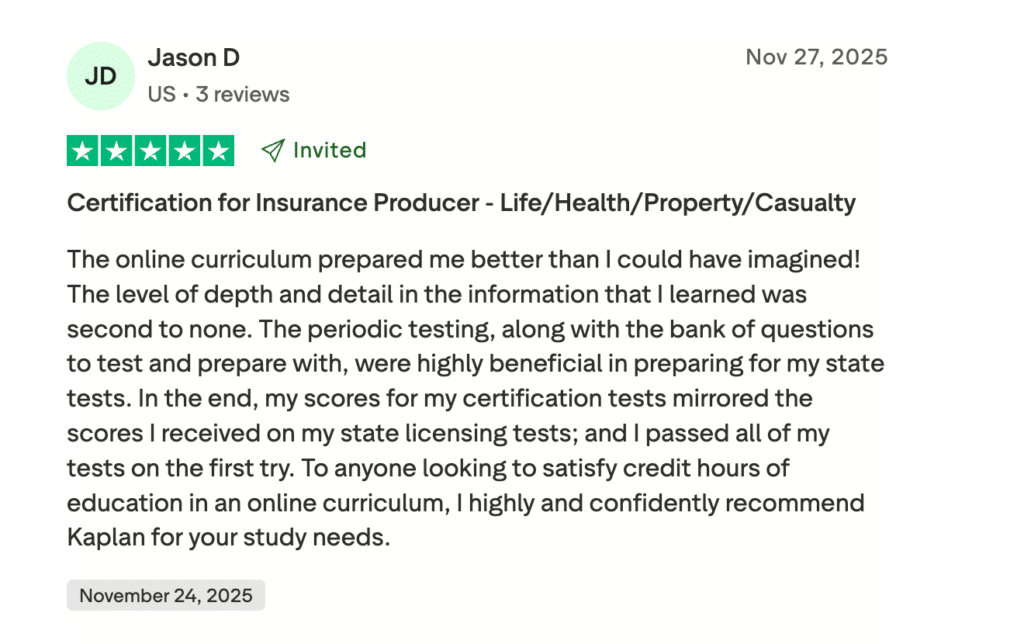
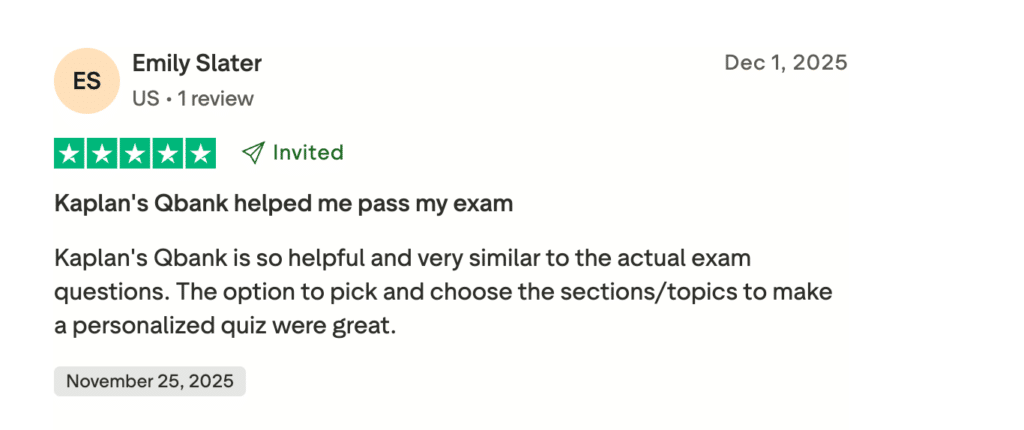
- The QBank. This comes up constantly as a standout feature. Reviewers say practicing with the question bank is what actually prepared them for the exam.
- Multiple formats. People appreciate having videos, reading materials, and quizzes together; the variety helps things stick.
- Instructors (when applicable). Reviews of live or instructor-led sessions tend to be very positive, with specific instructors called out by name.
What people don’t like:
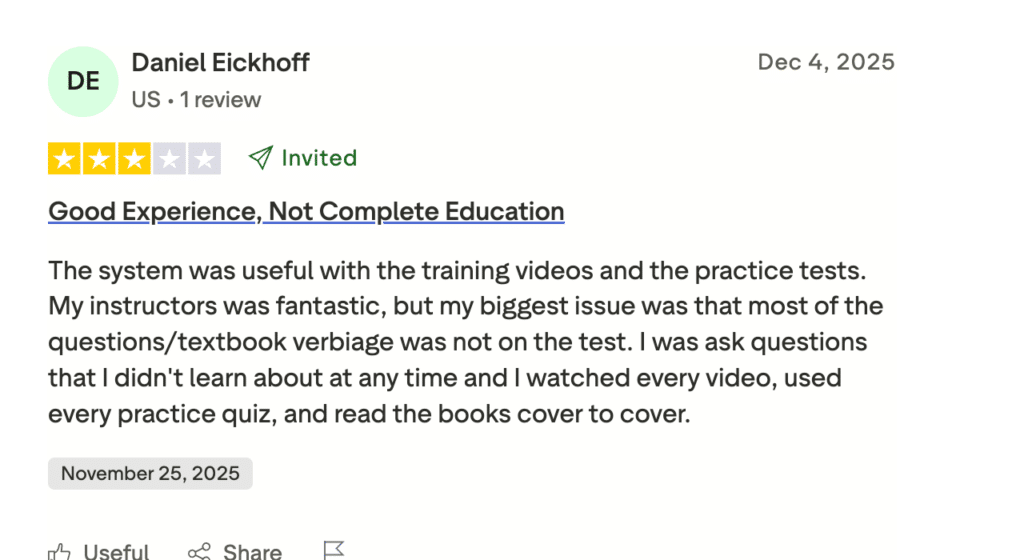
- State-specific content gaps. Some reviewers say questions appeared on the actual state exam that weren’t covered in the Kaplan course at all; particularly in the state-law portions.
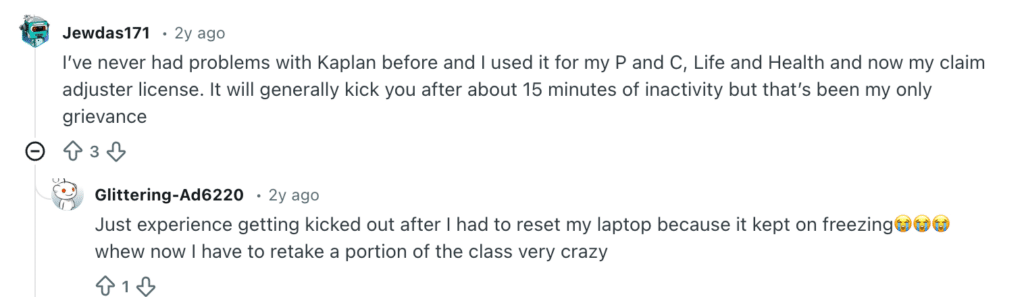
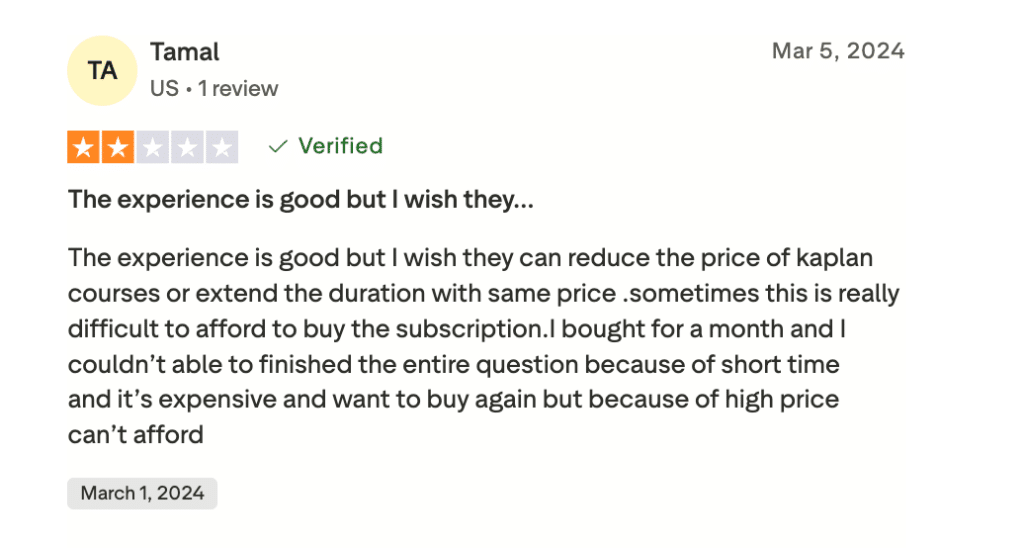
- Short access window. The 60-day limit comes up as a pain point, especially for people juggling work, family life, and other commitments.
- Dense and text-heavy. A recurring theme is that the material can feel dry, and some reviewers felt they were memorizing terms rather than truly understanding concepts.
Don’t just take it from us. Here are some reviews from TrustPilot and Reddit.

Pros and Cons of AdjusterPro
What People Like About AdjusterPro
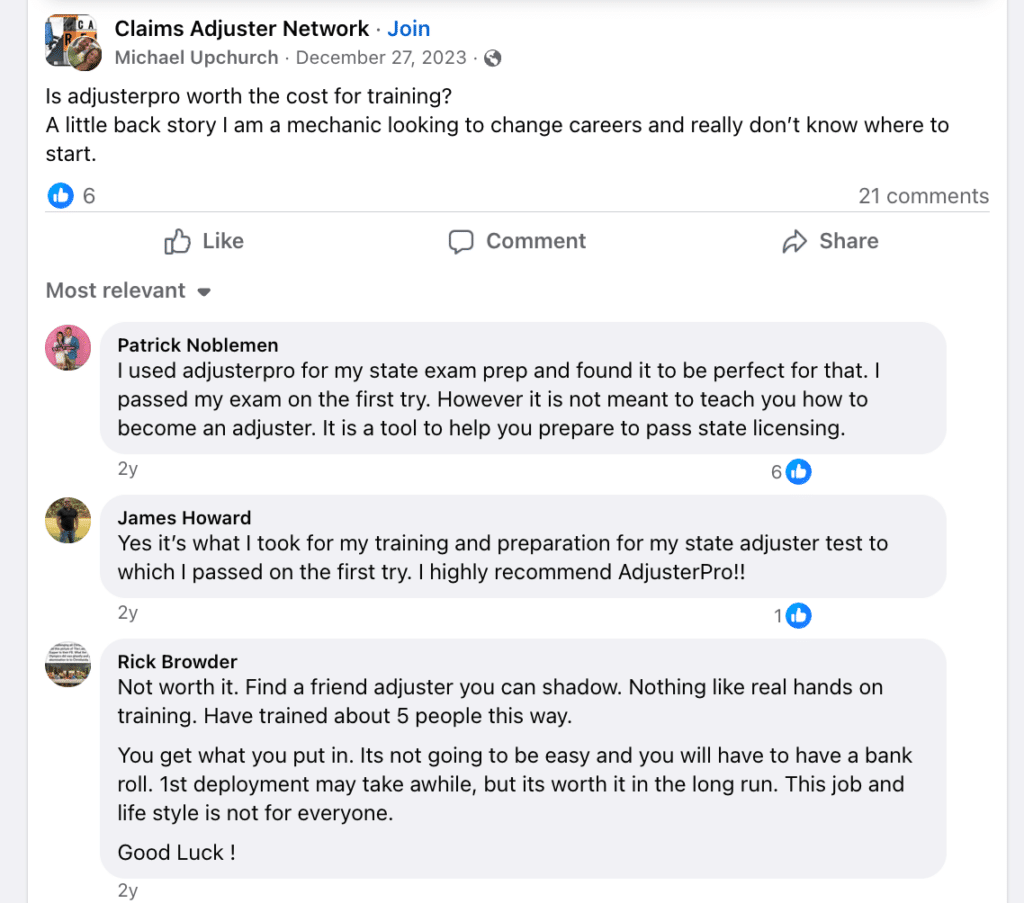
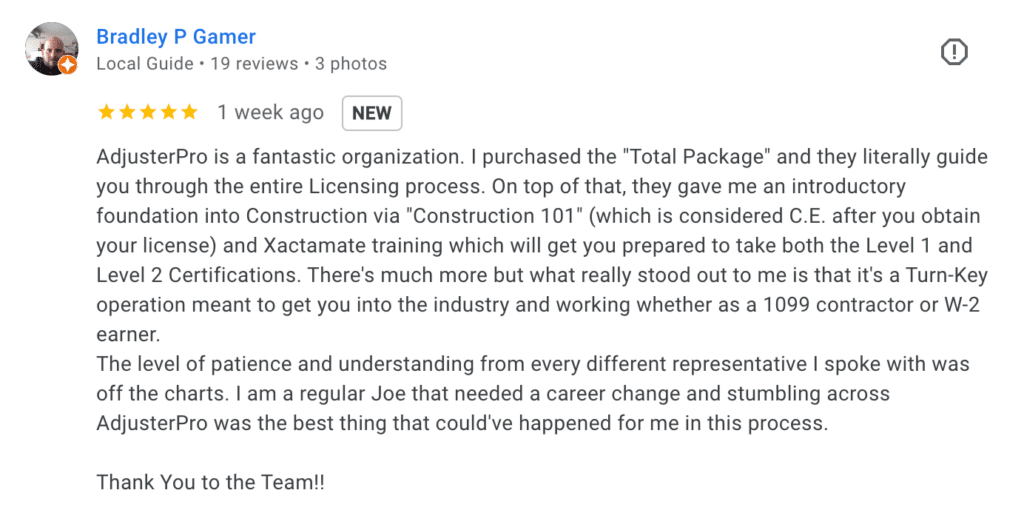
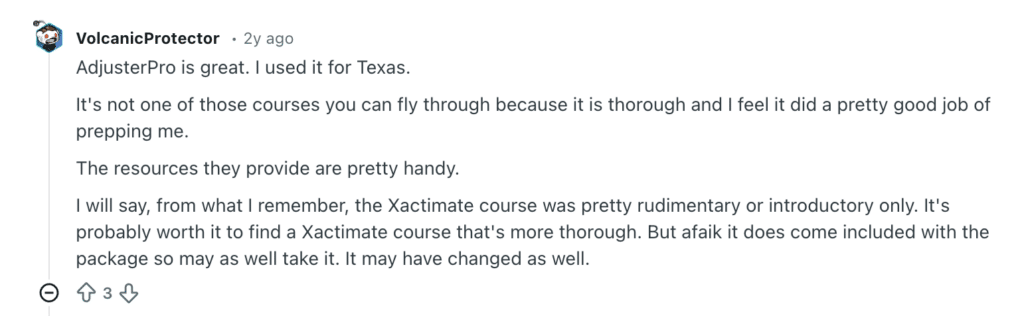
- Plain-language explanations. Reviewers consistently note that AdjusterPro breaks down complex insurance concepts in a way that’s easy to follow, particularly for people who are brand new to the industry. The course is built to teach, not just to prepare you for a test.
- Course access window. Unlike providers that cut off access after 60 days, AdjusterPro offers significantly longer access to course materials, which students appreciate when balancing work and other commitments.
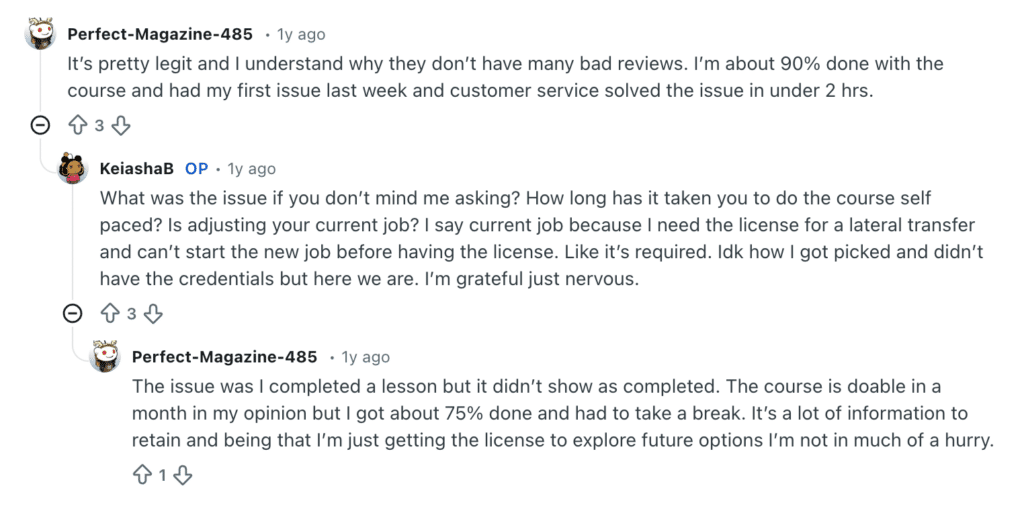
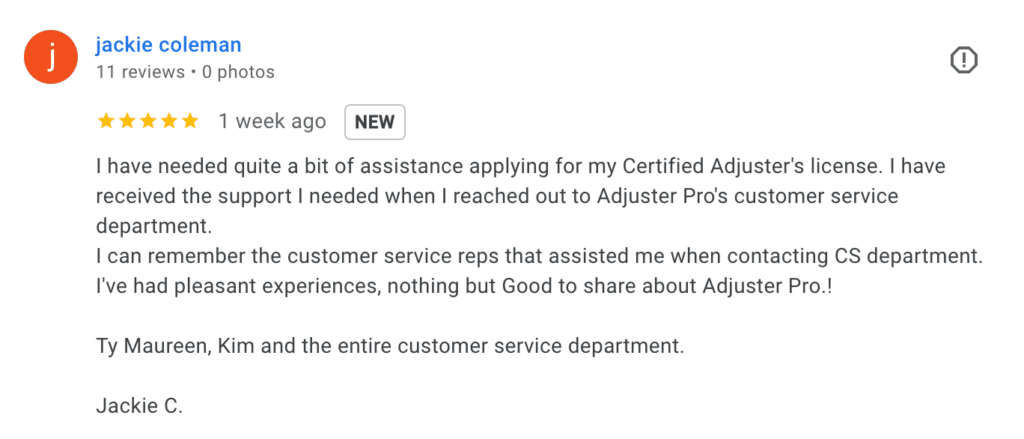
- Customer support. Reviewers frequently mention responsive, helpful support as a standout feature — described as real people who actually answer questions.
What People Don’t Like About AdjusterPro
- Audio quality issues. Some reviewers flag inconsistent audio in course recordings — changing voices between lessons, volume that drops off, and occasional background noise that makes it harder to focus.
- Technical issues. A handful of reviewers report slow load times and occasional platform glitches, particularly with quizzes.
- Errors in course materials. Some users note typos, grammatical mistakes, and missing words in the written content, which can be distracting.
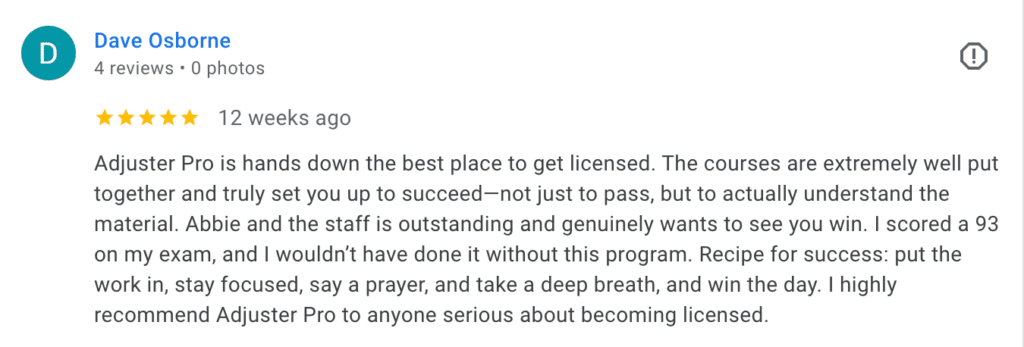
AdjusterPro doesn’t have reviews on TrustPilot, so we included reviews from Facebook, Google and Reddit. Since we are writing this article ourselves, we chose realistic reviews that reflect the realities of our courses, not just reviews from satisfied customers.
How Much Do Kaplan’s Adjuster Licensing Prep Courses Cost?
Kaplan’s adjuster licensing prep pricing varies by state, license type, and package, so there is no single universal price for every adjuster course.
For a concrete example, Kaplan’s Texas All-Lines Adjuster Basic package starts at $239. Kaplan sells its adjuster courses in package tiers, with common options including Basic and Essential. The Basic package is the lower-tier self-study option, while the Essential package ($299) adds more review and study tools. Kaplan also sells some study aids separately, such as flashcards and quicksheets.
Both Texas packages include a 60-day access period, with paid extensions available.
Note that for Kaplan courses, some study materials are included in the courses, but additional quizzes and flashcard-style study aids are purchasable as add-ons.
Because pricing varies by state and package, readers should always check Kaplan’s current course page for their state before enrolling.
How Much Do AdjusterPro’s Licensing Prep Courses Cost?
Similarly, AdjusterPro’s adjuster licensing prep courses are priced by state and course type, starting at around $199 (Texas pre-licensing is $299). Pre-licensing courses are priced higher because they include exams and state-mandated reporting.
The standalone course includes the licensing prep you need for your state, along with all of its built-in study tools, and lifetime access to your course. If you want more than exam prep, AdjusterPro also offers separate supplemental job-readiness classes, or you can bundle those into the Total Adjuster Package.
The Total Adjuster Package combines your licensing course with additional training designed to help you prepare for the job itself, such as Xactimate, construction basics, and career planning. AdjusterPro says Total Adjuster Package pricing ranges from $649 to $849, depending on state requirements. (The Texas Total Adjuster Package is currently listed at $799.)
Because pricing varies by state, the cost you see may be higher or lower depending on where you’re located and what type of course you need. It’s worth checking AdjusterPro’s website directly to see the current pricing for your state before making a decision.
How Do AdjusterPro and Kaplan’s Pass Rates Compare?
Both AdjusterPro and Kaplan publish strong student success data, but the numbers are not measuring the same thing, so they should not be compared at face value. Take a look below:
AdjusterPro Pass Rates:
AdjusterPro reports that, based on data from 2020 – 2025:
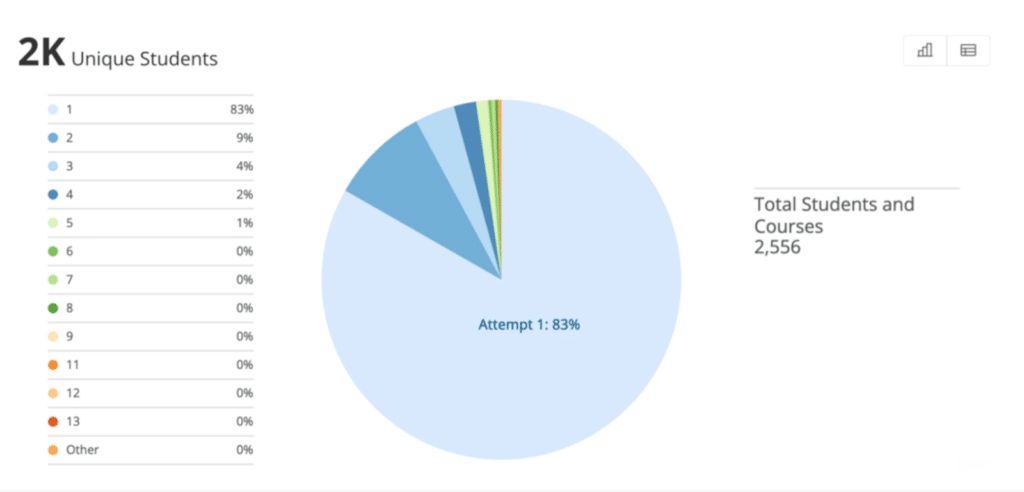
- 83% of students pass on their first exam attempt
- 92% of students pass in 2 exam attempts
- 96% of students pass in 3 exam attempts
- 98% of students pass in 4 exam attempts
- 99% of students pass in 5 exam attempts
That means that 99% of AdjusterPro students passed the exam overall, with 83% passing on their first attempt. This is especially notable given the typical first-time adjuster licensing pass rates across the U.S. generally range between 50% and 70%, according to annual reports from the National Association of Insurance Commissioners (NAIC). This means that up to 50% of students nationwide fail on their first try.
It’s also worth noting that AdjusterPro’s reported pass-rate pool is smaller than its total student population. That’s not because fewer students succeed with AdjusterPro, but because only certain state pre-licensing students take their licensing exam directly through AdjusterPro.
Most exam prep students, both ours and those from other providers, will move on to take their state exam through either PearsonVue or PSI. Neither of those exam providers makes their pass rates publicly available, which is why it is difficult to find confirmable or consistent pass rates across all state adjuster exams.
Kaplan Financial Pass Rates:
Kaplan reports strong exam success rates, but its data is not directly comparable to AdjusterPro’s first-attempt pass rate. According to Kaplan’s website, its reported results range from 84% to 93% across several securities licensing exams (not adjuster exams), including the Series 6, Series 7, Series 9, Series 10, Series 24, Series 66, and the SIE, and are based on survey research from 2019 through July 2025.
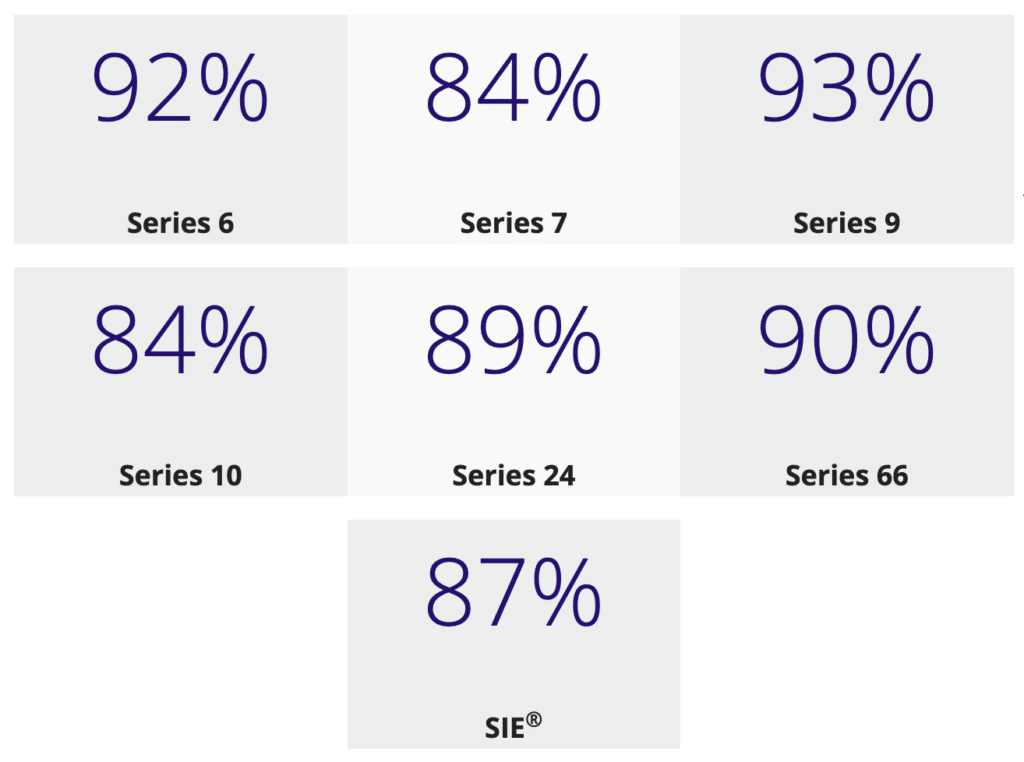
However, Kaplan clearly states that this data reflects students’ ultimate success, which may have required multiple exam attempts, not first-time exam pass rates.
Kaplan also states that students pass its insurance licensing exams with 92% for life and health, and 90% for Property and Casualty, based on pass rates reported in a survey of 2,079 students (from April 2022–March 2023). Note that this survey does not specify first-time pass rates either.
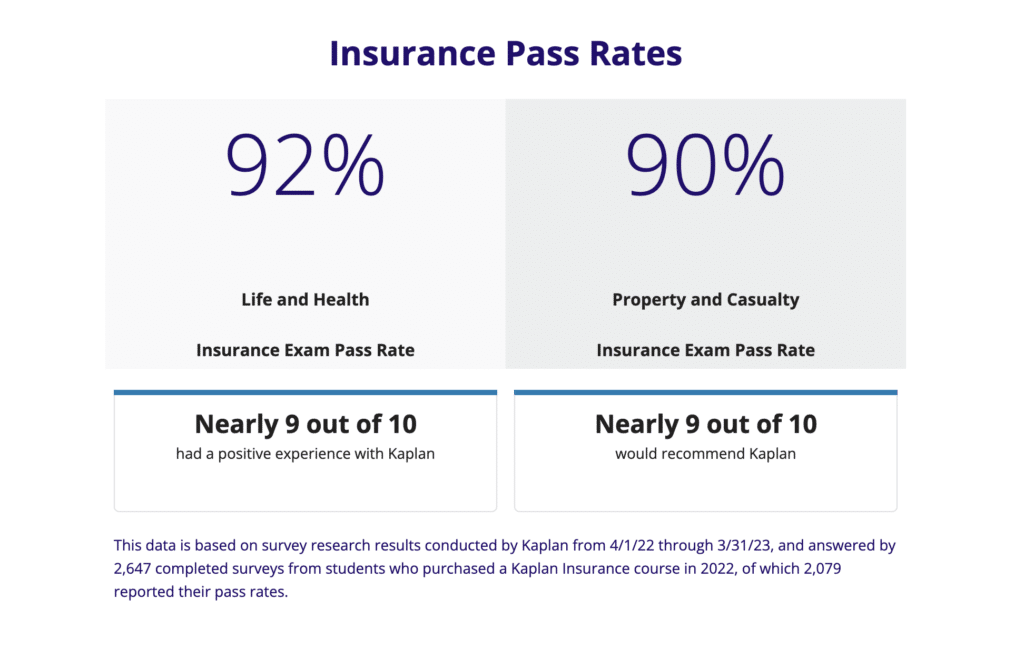
That distinction matters. A first-attempt pass rate is generally the stronger benchmark because it shows how well a program prepares students to succeed immediately, without needing to retake the exam. Kaplan’s results are still impressive, but they measure a different outcome: whether students eventually passed after using Kaplan’s materials and following its study plan.
There is also a difference in how the data is collected. AdjusterPro’s number is based on directly verifiable pre-licensing exam outcomes from a narrower group of students, while Kaplan says its results come from survey research conducted by Kaplan and reflect self-reported student outcomes.
Editor’s Note: As of April 2026, two of Kaplan’s affiliate partners’ websites (State Requirement and AdjustThis) state that Kaplan has a 93% pass rate for adjuster licensing courses, but we were not able to verify the information on Kaplan’s website (other than what we state above).
So, what’s the takeaway? AdjusterPro’s published data provides a clearer picture of first-time exam readiness, even though it reflects only the subset of students whose licensing outcomes the company can directly verify. Kaplan’s data speaks more to long-term eventual success across a larger reported sample, but because the methodology is different, this is not an apples-to-apples comparison.
| Bottom line: If you are specifically trying to evaluate who gives students the best chance of passing on the first attempt, AdjusterPro’s published pass-rate data is more directly relevant. Kaplan’s reported outcomes are strong, but since they may include multiple attempts and are based on different reporting methods and securities exams, they should be interpreted differently. |
AdjusterPro Vs. Kaplan: Which is Best For You?
Both Kaplan and AdjusterPro provide tools and education to help you get licensed. The question to ask is: “Which course fits my learning style and where I’m headed?
| Kaplan may be the better fit if: – You want a well-known education brand with a long track record across multiple industries – You’re still exploring your options and may pursue other insurance licenses beyond adjusting – You prefer a lower cost course option with the option to pay less if you don’t need study materials and add-ons – You are confident you can complete your course in the specific time window | AdjusterPro may be the better fit if: – You’ve decided on a career in claims adjusting and want training built specifically for that path – You want an all-in-one solution for a single price without worrying you may need to pay more for features later – Your schedule varies and you want the flexibility to complete the course whenever it works for you |
What’s Next: Where to Go From Here?
Choosing between Kaplan and AdjusterPro comes down to what kind of learning experience, support, and flexibility you want as you prepare for your adjuster career. Both are legitimate options, and both may help the right student move forward with confidence.
Kaplan may be the better fit if you prefer a large, established education brand, want multiple learning format options, or are exploring broader insurance licensing paths beyond adjusting. AdjusterPro may be the better fit if you want a provider focused specifically on adjuster training, self-paced online learning, and long-term access to course materials.
The most important thing is not choosing the “best” course in general, but choosing the one that best matches your state requirements, budget, learning style, time constraints, and career goals. Before enrolling, take time to compare each provider’s current state offerings, access terms, included study tools, and support options. That way, you can make a decision based on what matters most to you, not just brand familiarity.
If you’re specifically considering AdjusterPro and want help understanding which course path makes sense for your state or goals, our team can help you explore your options and decide whether we’re the right fit.
| What to Ask Before You Enroll in Either Program: – Is this course approved or accepted in my state? (for pre-licensing only) – What’s included for the price I am paying? – What support is included if I have issues? – How long do I have access to the course? – What is the refund or transfer policy? – Does this help me reach my goals? Note: double-check that you are getting the right license for your goals and location before you purchase. If you need to, contact our team to discuss, and don’t forget to get your home state license first, if that applies to your location! |

